Modern Production of SAMe Powder Using Advanced Biotech Methods
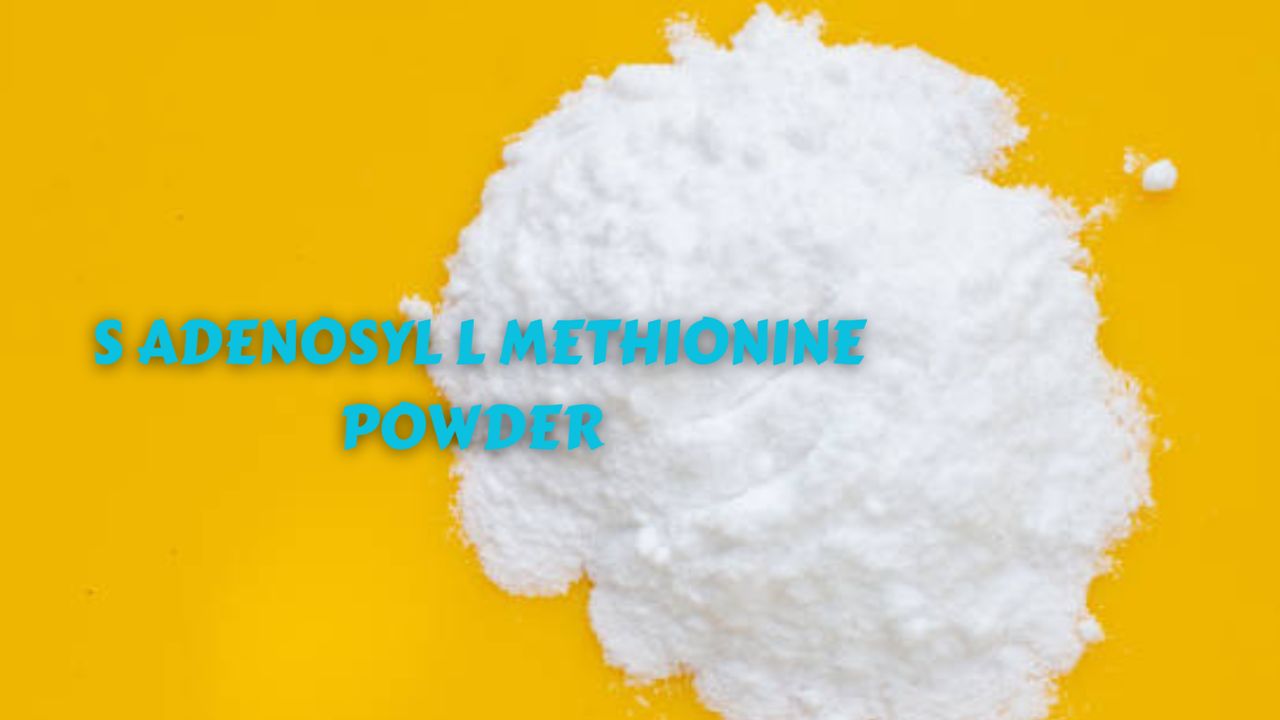
SAMe powder (S-Adenosyl-L-methionine) has been extensively utilized in supplements and drugs. It is also found naturally in the body and has been shown to help maintain important chemical processes that support balance in a person’s mood, liver function, and joint function. However, the natural process is time-consuming and has made it impractical to produce in large quantities, so modern production relies on controlled biological systems that can produce it in large, stable batches. In the past, production methods have been adapted to cleaner, more controlled biotech systems, resulting in greater consistency and fewer by-products.
Biological Starting Point
The production starts with the careful selection of microbial strains capable of performing the required chemical steps. These organisms are selected for their ability to transform simple nutrients into SAMe precursors. The process is designed to simulate natural processes under controlled conditions. This will ensure product stability and minimize batch-to-batch variation.
Controlled Fermentation
The main step involves fermentation, the process by which SAMe is formed. Microorganisms are cultivated in hermetically sealed tanks, in which the temperature, oxygen level, and nutrient supply are controlled. This setting enables them to gradually generate SAMe over the course of time. These conditions have a significant influence on yield, and therefore, the conditions are monitored throughout the process to keep them stable.
Raw Material Input
Simple carbon and nitrogen sources serve as the nutrients in fermentation. These inputs are for sustaining continuous production activities in the microbial system. It is important that these inputs are pure because they affect the product. Reduction of variability is achieved by many manufacturers using defined ingredient standards.
Role of Enzyme Control
Microbial enzymes control the conversion of nutrient components into SAMe. These enzymes act as microscopic tools guiding the process from start to finish. Ensure that your enzyme activity is optimal so as to achieve maximum yields without changing anything else in the system. Producers such as GSH World focus on regulating enzymes to sustain output without adding complexity.
Separation Process
Once fermentation is complete, SAMe must be separated from the mixture. This is done through filtration and purification steps that remove biomass and other residues. The goal is to isolate SAMe in a clean form while preserving its structure. Each stage reduces unwanted material until only the target compound remains.
Purification Steps
Purity is further improved to achieve high standards of purity. Methods like crystallization and drying are employed to enhance the product’s quality. This will result in the production of a highly consistent powder. At this stage, even small differences in processing can influence the final appearance and stability of the powder.
Quality Testing
Once the purification is complete, purity, water content, and stability tests are conducted on the samples. This is done to make sure that the substance is consistent under storage and application conditions. It is also ensured that there are no other contaminants present. GSH World applies multi-stage testing systems during this phase to confirm batch reliability before release.
Forming the Powder
The refined SAMe is then processed into powder form. This involves controlled drying and milling to achieve a uniform particle size. The goal is to make the powder easy to handle and mix in final applications. Consistent particle size also helps ensure even distribution when used in formulations.
Packaging and Stability
The packaging of the powder after its preparation needs to be done in a way that ensures its protection from water and sunlight. SAMe is highly vulnerable to environmental factors; therefore, packaging is vital. The packaging materials are carefully chosen with the aim of stabilizing them. Some production lines, including those at GSH World, apply sealed systems to reduce exposure risks during handling.
Production Consistency
Maintaining uniformity between batches is among the key challenges associated with SAMe production. This process takes place under controlled conditions, with consistent inputs and repetitive processes. Data from each batch is recorded to ensure that future production remains within the same range. GSH World maintains batch-tracking systems to support long-term production consistency across orders.
Conclusion
The production of SAMe powder using biotech methods relies on a sequence of controlled biological and purification steps. Each stage, from microbial growth to final packaging, contributes to the quality and stability of the final product. While the process is highly technical in structure, its goal remains straightforward: to produce a stable, usable form of a naturally occurring compound. As production systems continue to refine their methods, consistency and quality control remain central to the entire process.